You know which ad won. Playhead tells you why.
Playhead measures how an ad is built: cuts a second, median shot length, the second the product appears, every beat with its start and end. Counted frame by frame, never guessed. Read a set, and you see what your winners share and a control does not.
50,000 credits a month free, then plans from $19
Every cut, counted.
Four ads for AG1 and AG1 Pro, read into one set. Each one keeps its own clock: the frames it was read from, the second each thing first happens, and the beats as a band. The cuts are counted frame by frame, so the pace is a number. Across these four it is 0.63 cuts a second, on a median shot of 1.04 seconds. Press any second and the ad opens there.
Each ad on its own clock
Ad 1 of 4 · studio · ugc · 9:16
4 ads
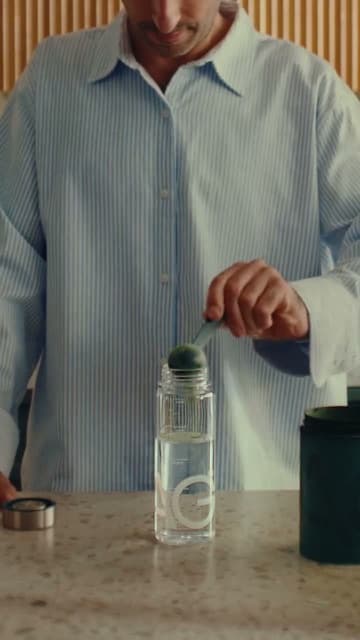
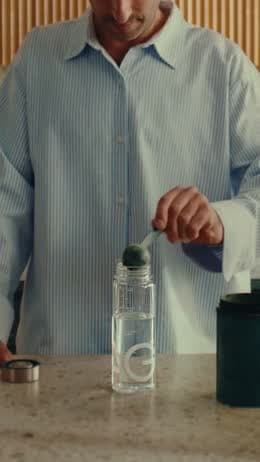
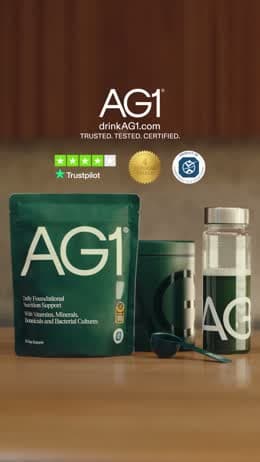
1AG1 Routine & Trust Verification Bumper
Opens on
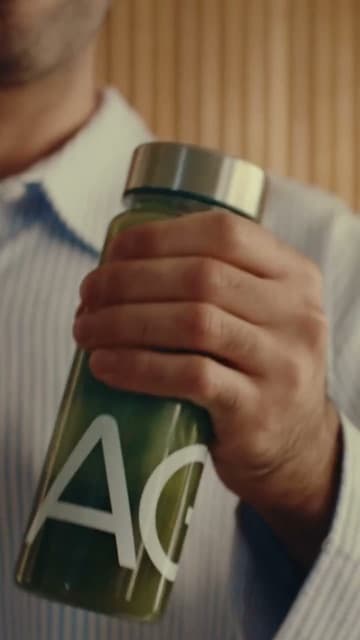
A man in a shirt scoops green powder into an AG1 shaker bottle on a counter.
2AG1 Pro Launch Fast-Paced Fitness Montage
Opens on
A hand unzips a green bag to reveal AG1 Pro daily nutrition packets.
3AG1 Pro Launch Announcement
Opens on
A hand holds up two green AG1 Pro stick packets against a backdrop of bright pink flowers with text overlay.
4AG1 Routine and Offer Demonstration
Opens on
Shirtless man wearing an orange hat leaning against a kitchen counter with an AG1 canister in front of him.
The same question, put to every ad.
A row of the grid is one question asked of all four at once, so the comparison is read across. A yellow bar marks the row where the ads do not agree, and that is the row worth reading.
The same question, asked of each
A yellow bar marks a row where the ads do not agree.
Demonstration
VisualSpoken
A man in a shirt scoops green powder into an AG1 shaker bottle on a counter.
Product first
VisualOn screen text
INTRODUCING AG1 PRO
A hand unzips a green bag to reveal AG1 Pro daily nutrition packets.
Product first
VisualOn screen textSound
AG1 Pro is HERE 🤩
A hand holds up two green AG1 Pro stick packets against bright pink flowers, with text over the picture.
Claim
SpokenVisual
A shirtless man in an orange hat leans on a kitchen counter, an AG1 canister in front of him.
- Product seen · named
- ·
- Brand seen · named
- ·
- First face
- Demonstration
- →
- Product seen · named
- ·
- Brand seen · named
- ·
- First face
- Demonstration
- →
- Product seen · named
- ·
- Brand seen · named
- ·
- First face
- No face appears in the video.
- Demonstration
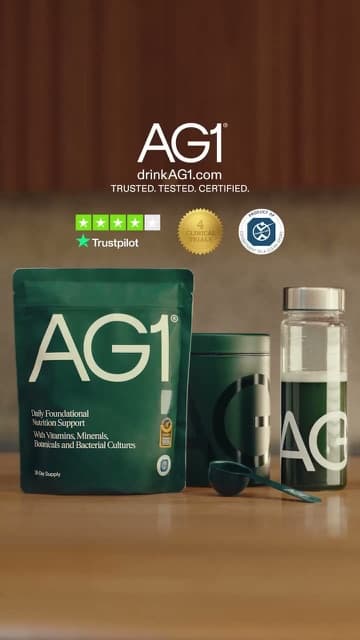
- The product is shown packaged and static, never in use.
- Product seen · named
- ·
- Brand seen · named
- ·
- First face
- Demonstration
- →
on screen
on screen and spoken
on screen
spoken, twice
gifton screen
bundlespoken
No captions
No captions
No captions
No captions
The mixing and the end card carry the ritual and the brand without audio.
Every claim, benefit and the ask are on the picture as graphics.
Music only. The launch and the offer are text on the picture.
No captions and no text on the picture. The offer and the benefits are spoken only.
- short0.4s
- median0.8s
- long1.6s
- short0.0s
- median0.8s
- long2.4s
- short2.8s
- median3.7s
- long4.6s
- short0.8s
- median1.3s
- long19.9s
Four AG1 launch video ads
4 of 4 ads read · 5,710 credits
What the set says
Every answer covers all 4 ads
free · 2 questions a day without an account
Every second on this page is a control. Press one and the ad opens there.
Open the ads analyzer →It describes, it does not grade.
It cannot see performance.
Every claim is inspected.
Under the analyzer, the video layer.
Every product on this site is one question put to the same engine. Your own software asks it over HTTP and gets words back, with the second of every moment. The frames never reach your context.
POST /v1/watch_video
{
  "url": "https://www.facebook.com/ads/library/?id=…",
  "question": "Take this ad apart."
}

200
{
  "moments": [
    { "t": 0.0, "text": "A hand, two sachets, pink flowers" },
    { "t": 1.0, "text": "Text: AG1 Pro is HERE" },
    { "t": 2.8, "text": "Cut to a counter with the box" },
    { "t": 4.0, "text": "Text: Get your free Welcome Kit" }
  ],
  "session_id": "ses_…"
}
8,336
205
Tokens, measured on fourteen videos.
Four products stand on the same call.
Ads analyzer
4 ads · 5,710 credits
Watch video
1 question · 150 credits
Video to prompt
1 video · 1 prompt · 58 words
SOP creator
1 recording · 3 steps

The first question watches the video. The second one is cheap.
Every answer carries a session id. Pass it with the next question about the same video and that question reads what was already found, instead of watching the video again. A question is priced by the length of the video it is about, and by nothing else.
What one question costs
What people ask before they paste the first ad.
- Can it tell me why an ad won?
- What does it read off an ad?
- Can I compare a set?
- Can an AI agent watch a video?
- Does it work with my own files?
- Do I have to install anything?